← 返回博客
2026年10月26日
Qing Ming Festival in Kuching, Malaysia: A Cemetery Guide
I hadn't expected a cemetery to be loud. But that's the first thing that hit me during the Qing Ming Festival in Kuching, Malaysia: a soundscape built out of crackling paper, roaring fire, and intermittent, startling bangs that made me flinch every time, no matter how many times I heard them that afternoon. I'd come to Kuching with only a loose idea of what Qing Ming actually involved on the ground, and nothing about scrolling past the name of the festival online prepared me for standing inside a cemetery while explosions went off around graves draped in incense smoke.
Qing Ming Festival — sometimes called the tomb-sweeping festival — is one of the most widely observed traditions in Chinese communities around the world, typically falling in early April. Families return to the graves of their ancestors to clean the headstones, tidy the surrounding plot, and perform a set of rituals meant to honor and provide for the dead. Kuching, the capital of Sarawak on the island of Borneo, has a large and long-established Chinese community, and that history is written directly into how seriously Qing Ming is observed there. This wasn't a festival staged for visitors. It was a working cemetery, full of families doing exactly what their families have done on this day for generations.
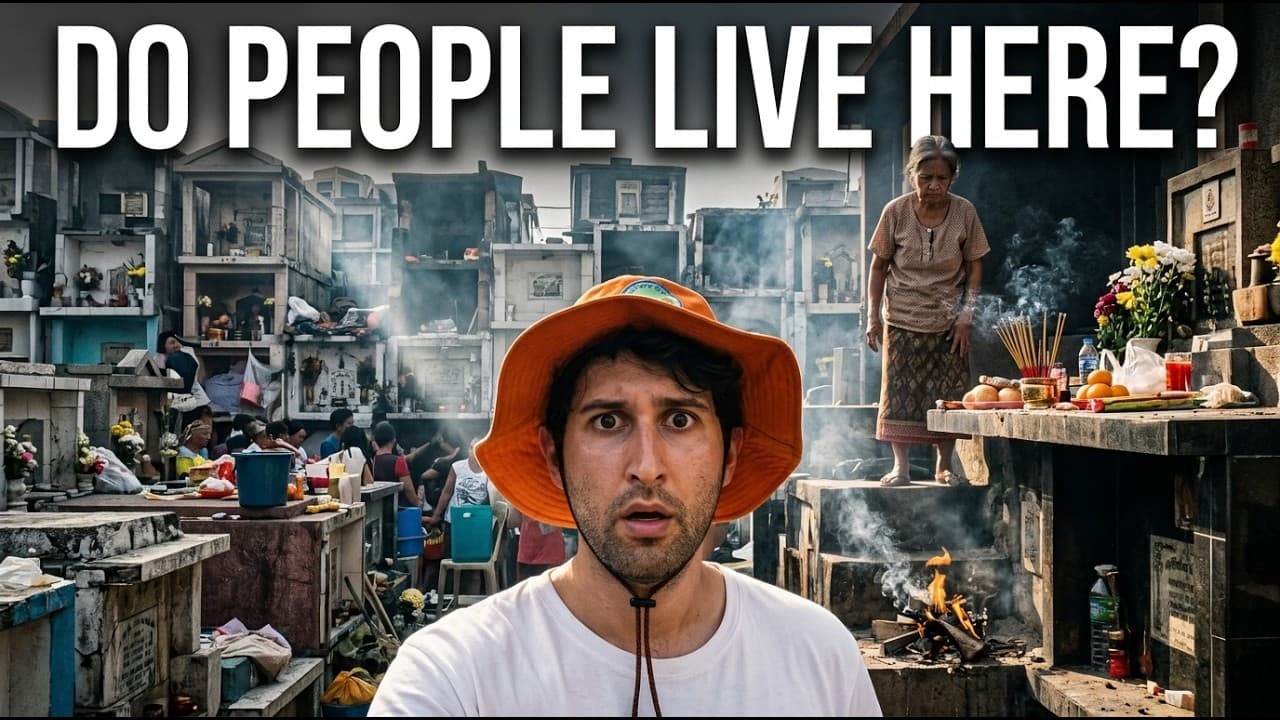
The core of what I watched came down to three things, repeated across plot after plot: paper money being burned, huge fires being lit, and explosions set off as part of the tradition itself. The paper money wasn't the kind you'd spend anywhere — it's made specifically to be burned, a way of sending wealth to ancestors in whatever comes after this life. Families would kneel by a grave, light a stack of it, and feed the fire steadily, sending up thin curls of smoke that blurred together across the whole cemetery into a kind of low haze hanging over the graves. The fires themselves were bigger and more deliberate than I expected — not a quick symbolic flame but something closer to a bonfire, built to actually consume everything that had been brought.
And then there were the explosions. I use that word carefully because it's the only one that fits: sudden, sharp bursts, loud enough to carry across the cemetery and startle anyone not expecting them, set off intentionally as part of the ritual itself. I never fully adjusted to them. Every time I thought I had the rhythm of the day figured out, another one would go off somewhere nearby, and I'd feel that same jolt of surprise all over again. Combined with the fire and the smoke, the whole experience had an intensity I wasn't prepared for walking in — it felt less like watching a quiet memorial and more like standing inside something closer to a controlled, communal eruption of noise and fire, all of it aimed at the same purpose: making sure the dead were properly remembered and cared for.
If you want to see the Qing Ming Festival in Kuching, Malaysia for yourself, timing is everything — this is strictly an early-April event, tied to the lunar calendar, so it's worth checking the specific date for the year you're traveling rather than assuming it lands on a fixed day. Kuching's Chinese cemeteries are where the activity concentrates, and you don't need a ticket or a tour to witness it; you simply need to go where local Chinese families are already gathering and observe from a respectful distance. Expect smoke, expect noise, and expect the unexpected bang of an explosion somewhere nearby — it's loud and visceral in a way photos of the festival never quite capture. Dress like you're prepared to be around open fire and drifting ash, and don't expect anyone to perform for your camera; these families are there for their own ancestors, not for an audience.
What struck me most, walking back out of the cemetery afterward, was how far this was from the sanitized, symbolic version of ancestor worship I'd half-expected. There was nothing quiet or abstract about it. Paper money actually burning down to ash, fires that needed tending, explosions loud enough to make a stranger flinch — this was memory expressed as something physical and urgent, repeated honestly rather than performed. Of everything I saw traveling through Malaysian Borneo, the Qing Ming Festival in Kuching stayed with me as one of the most genuinely surreal, unfiltered cultural experiences of the whole trip, precisely because nothing about it was built with a visitor like me in mind.
最初发布于 YouTube