← 返回博客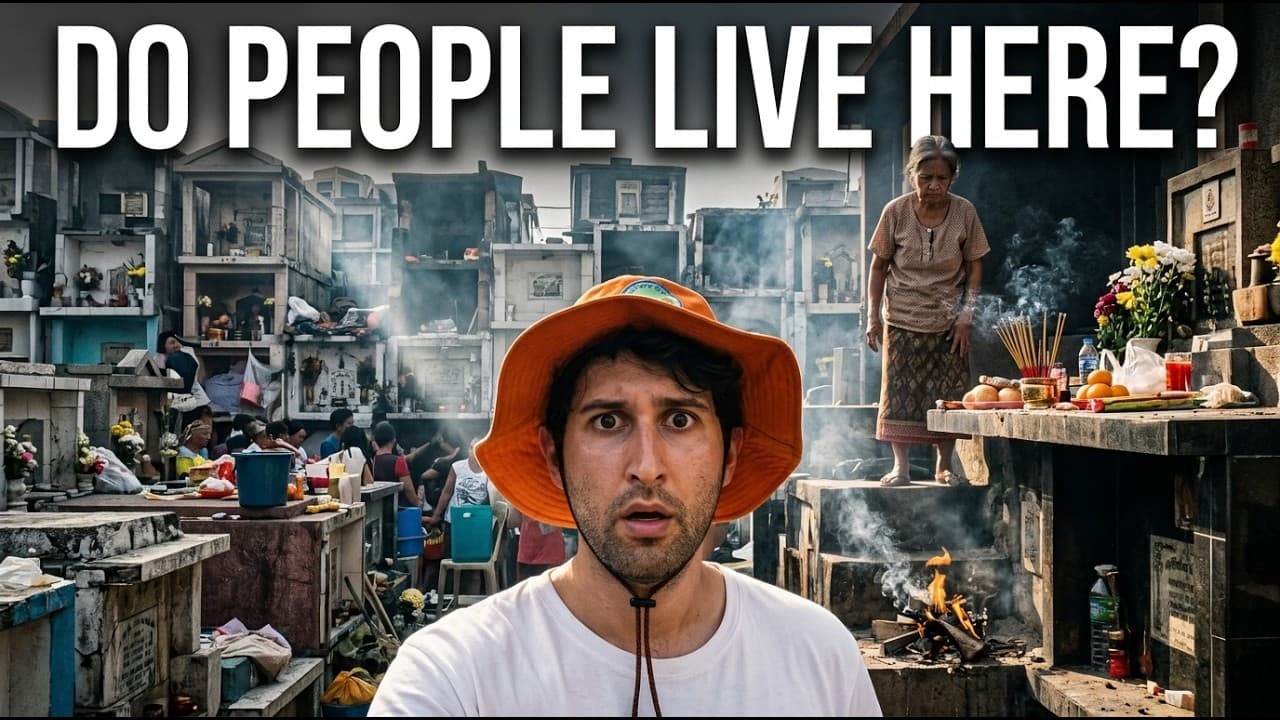
2026年10月23日
Inside Manila's Chinese Cemetery: A Visitor's Guide
Manila's Chinese Cemetery is not what most people picture when they hear the word cemetery, and visiting during Qingming Festival — the Chinese tomb-sweeping holiday when families return to clean and honor their ancestors' graves — made that difference impossible to miss. I went in expecting rows of headstones. What I found instead was a place unlike anything I'd seen before: a self-contained small city of the dead, built in multiple levels, where some of the dead are kept more comfortably than plenty of the living.
The first thing that breaks your sense of what a cemetery is supposed to be is the scale and structure of the graves themselves. These aren't flat plots with a stone marker. They're multi-level structures, built up rather than out, some of them several stories tall, designed to hold generations of one family in a single standing building. Walking between them felt less like walking through a graveyard and more like walking through a quiet residential street where every house happened to be a mausoleum. And then there's the detail that genuinely stopped me: some of these structures have air conditioning. Not symbolic cooling, not a figure of speech — actual air conditioning units built into family tombs, keeping the space comfortable the way you'd cool a home, because for the families who built them, in a sense, it still is one.
That detail says something about how this cemetery actually functions, which is the part a quick walk-through wouldn't tell you on its own. During Qingming Festival specifically, the grounds fill with families who've come to sweep the tombs, light incense, leave food, and spend real time at the graves of people they loved, sometimes staying for hours in family mausoleums built comfortably enough to make that possible. It reframes what the architecture is for. The air conditioning, the multiple levels, the sheer permanence of these buildings aren't excess for its own sake; they're built around the expectation that people will keep coming back, generation after generation, and that visiting should feel less like a somber obligation and more like time spent in a family space that happens to also be a resting place.
What stayed with me longest, though, wasn't the architecture at all. It was the people who spend much of their lives actually working inside the cemetery grounds. Talking with them made it clear that this place isn't just visited, it's inhabited in a practical, everyday sense — caretakers, groundskeepers, people whose working days are spent among these mausoleums year-round, long after the Qingming crowds have gone home. Their presence is what keeps a place this elaborate functioning the rest of the year, and it's easy to miss entirely if you only think of a cemetery as somewhere you pass through rather than somewhere people show up to, day after day, as work.
If you're planning to visit Manila's Chinese Cemetery yourself, timing matters more than almost anything else. Qingming Festival, which typically falls in early April, is when the grounds are at their most alive, full of families performing the rituals the cemetery was built around; visiting then gives you a sense of the place functioning exactly as intended, rather than just walking past closed, quiet tombs. Outside that window, expect a far quieter, more contemplative visit, since the cemetery is used by locals rather than built around tourist traffic. Go with respect for the fact that you're walking through a space that's actively used for mourning and remembrance, not simply a historic curiosity, and be mindful around families who are there for their own private rituals rather than for your benefit. The multi-level mausoleums are spread across a genuinely large area, so give yourself more time than you'd expect a cemetery visit to take; this one rewards slow, deliberate wandering rather than a quick loop.
What I left with wasn't a sense of a strange or eerie place, which is probably the assumption people bring to a headline like "people live inside this cemetery." It was closer to admiration for how deliberately this entire cemetery is built around memory as an ongoing, physical relationship rather than a single visit you make once and move on from. Air-conditioned family mausoleums and caretakers who spend their working lives among the dead sound unusual described from the outside, but standing there during Qingming Festival, watching families return to spaces built specifically so they could keep returning, it made a strange kind of sense. Manila's Chinese Cemetery isn't trying to be eerie or remarkable for its own sake; it's built, down to the air conditioning, around the idea that remembering someone properly takes more than one visit, and that the space for it should be ready every time.
最初发布于 YouTube