← 返回博客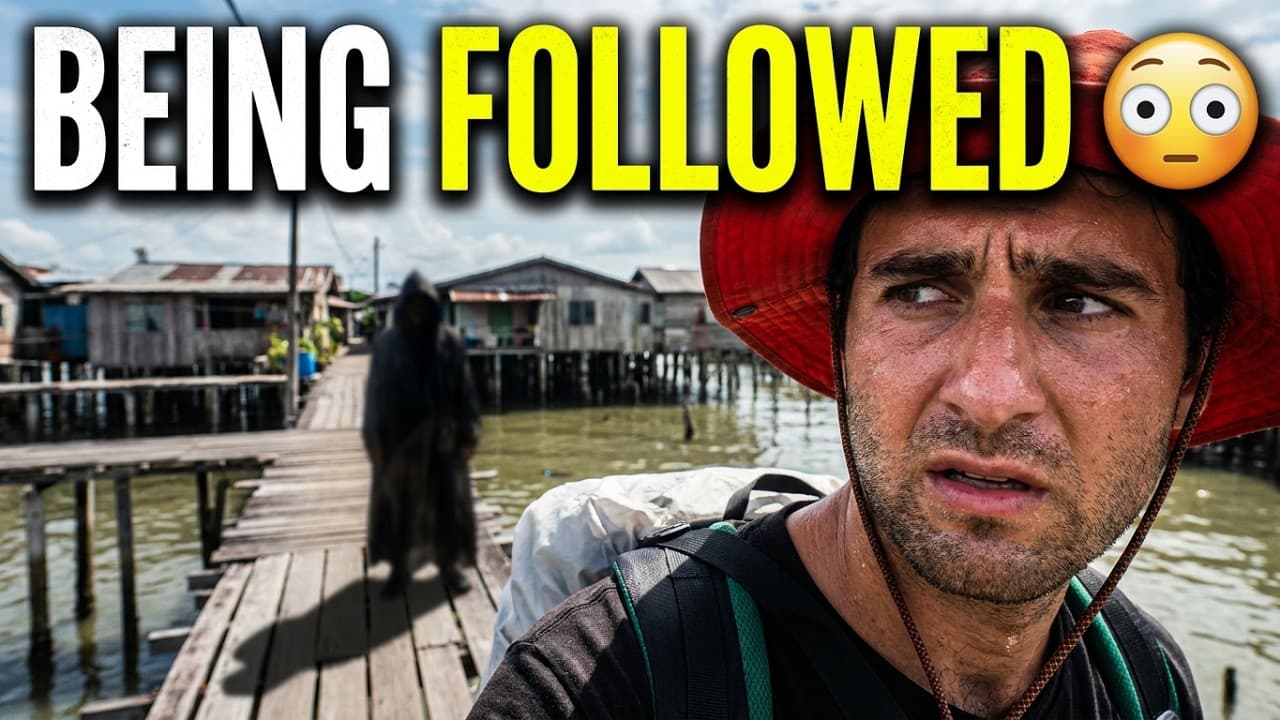
2026年10月31日
Gaya Island Floating Village: A Kota Kinabalu Guide
The Gaya Island floating village sat only a short speedboat ride from the jetty in Kota Kinabalu, but it felt like stepping into an entirely different rhythm of life the moment our engine cut out and the hull bumped against the first wooden walkway. My friend and I had planned the morning as something close to ordinary sightseeing: rent a boat, cross the channel, wander the stilt houses, come back before lunch. It didn't stay ordinary for long.
Kota Kinabalu's harbor was busy the way port towns usually are, boats loading and unloading, engines idling, a steady back-and-forth of people heading out toward the islands scattered along the coast. We picked a speedboat heading toward Gaya Island, the largest of the islands inside Tunku Abdul Rahman Marine Park just off the city's waterfront, and settled in for a ride that felt more like a commute for the people around us than a tourist excursion. The water turned from harbor-brown to a clearer blue-green as the mainland fell away behind us, and before long the first wooden structures of the floating village came into view, built out over the shallows on stilts and connected by a maze of narrow plank walkways that seemed to have no obvious beginning or end.
Stepping off the boat and onto those walkways was its own adjustment. Everything moved, not dramatically, but with the constant, low creak and sway of wood built over water rather than solid ground, boards worn smooth by years of bare feet and rubber sandals passing over them. Houses stood close together, walls patched with whatever material had been available at the time, laundry strung between posts, small boats tied up beneath the floors the way cars sit in a driveway. It was a settlement built entirely on the logic of water rather than land, and walking through it meant constantly recalibrating a sense of balance I hadn't realized I relied on.
At first, the visit felt like what we'd expected: quiet curiosity, kids glancing up from play, a few nods exchanged with people mending nets or sitting in doorways. But partway through, that feeling shifted. I started noticing the same figure appearing at the edge of my vision more than once, not aggressively, not confrontationally, just present, trailing a few walkways behind at a distance that felt too consistent to be coincidence. Whether it was simple local curiosity about two outsiders wandering a community that doesn't usually get visitors, or something closer to being watched, I genuinely couldn't tell, and that uncertainty ended up defining the rest of the walk more than anything we'd actually come to see.
That sensation, concrete enough to notice, vague enough that I couldn't fully explain it, turned what started as a straightforward boat trip into something closer to walking through someone else's version of normal, where we were clearly the unfamiliar element rather than the other way around. We kept moving instead of lingering, partly out of respect for the fact that this is somebody's home and not a staged attraction, and partly because neither of us wanted to find out what being followed through a maze of narrow walkways over open water might turn into if we let it keep going.
If you want to see the Gaya Island floating village for yourself, getting there is straightforward. Speedboats cross regularly from the jetty area in central Kota Kinabalu, and the ride out to Gaya Island takes only a matter of minutes rather than hours, which makes it an easy half-day trip rather than a full expedition. Gaya Island itself sits inside Tunku Abdul Rahman Marine Park, better known among visitors for its beaches and snorkeling spots than for the stilt communities built along its shallower edges, so the floating village tends to stay well outside the usual tourist itinerary. Go respectfully and go light. This isn't a boardwalk built for visitors, it's a functioning neighborhood, and the families living there have little use for cameras pointed at their front doors. Expect narrow, uneven walkways, expect to be the one being observed as much as you're observing, and expect the whole visit to feel less like a sightseeing stop and more like briefly, carefully, stepping into someone else's world.
Timing matters more than most people assume with a trip like this. Mornings tend to be calmer on the water and give the village itself more daylight to move through without rushing back before the last boat. Bring cash for the boat crossing, wear shoes you don't mind getting a little wet, and don't expect a jetty schedule printed anywhere, since this runs more on local rhythm than fixed departure times. None of that is exotic advice, but it's the kind of practical detail that gets lost once a place turns into a headline instead of somewhere you actually have to plan a morning around.
What stayed with me afterward wasn't a photograph or a souvenir, it was that unresolved, slightly unsettled feeling of not knowing whether I'd imagined being followed or whether I actually had been. Out of everywhere Borneo took us, the Gaya Island floating village is the one place I still can't fully explain, not because anything dramatic happened, but because nothing did, and the not-knowing is exactly what made it stick.
最初发布于 YouTube