← 返回博客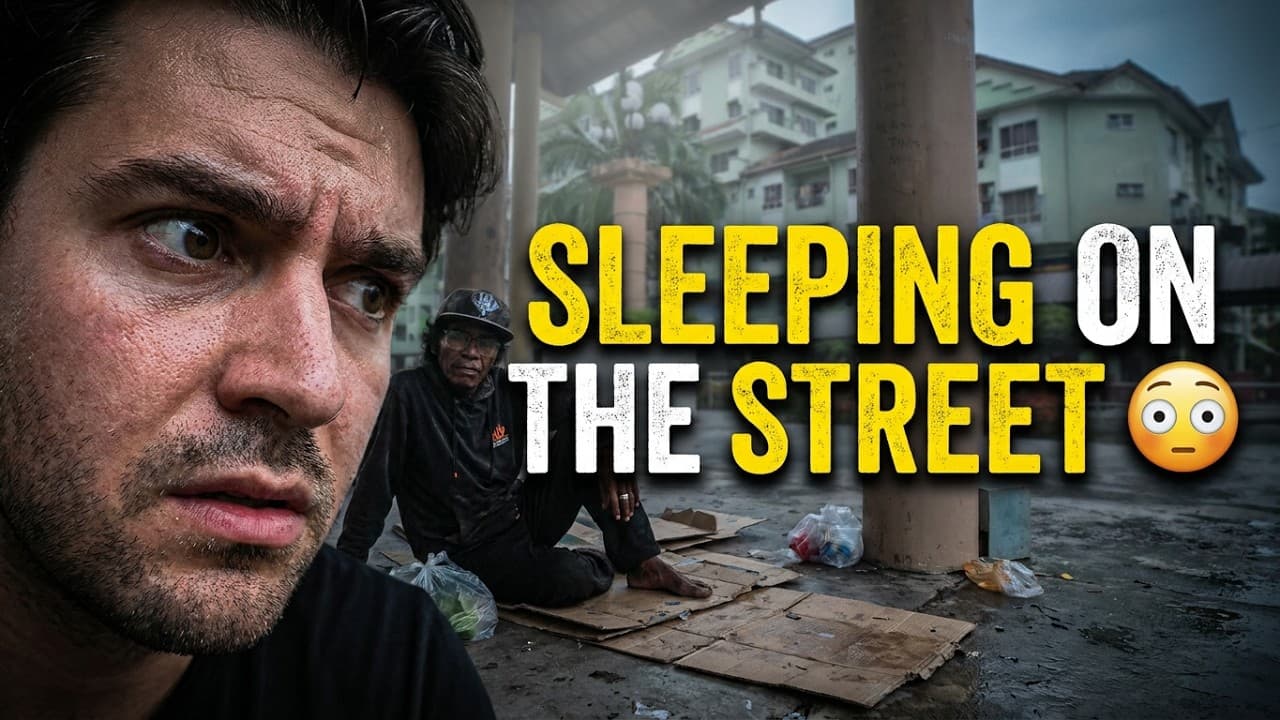
2026年11月9日
Sleeping Rough in Kota Kinabalu, Malaysia: What I Learned
Sleeping rough in Kota Kinabalu, Malaysia wasn't the plan for our second night in the city, but that's where my friend Emir and I ended up: stretched out in an open-sided pavilion near the waterfront instead of a hostel bed. We'd been moving through Borneo at a pace that didn't leave much room for planning every night in advance, and when evening came and neither of us felt like tracking down a room, the pavilion was simply there, roofed, open to the breeze coming off the water, and already doing the job it does every night for a lot more people than just travelers passing through.
It wasn't a dramatic decision. The structure itself was nothing more than bare concrete and a roof, the kind of public shelter you see all over Southeast Asian cities, built for shade in the daytime heat and repurposed after dark by anyone who needs somewhere to lie down. We weren't the only ones who had that idea that night. Scattered around the pavilion were other people for whom this wasn't a one-off experience or something to post about afterward, but simply where they slept, night after night, in a city that doesn't otherwise offer them much.
That distinction sat with me for the rest of the night, long before I had the chance to actually talk to anyone about it. I woke up before Emir did. He was still curled up against his bag, holding on to a few more quiet minutes before the city's heat and noise started back up for the day. Instead of waking him or packing up right away, I stayed where I was, and that's when a local man who was also staying in the pavilion and I started talking.
It wasn't a long conversation, and it wasn't dramatic either. We talked about ordinary things: how he spent his days, what his routine actually looked like, his own perspective on living the way he did in Kota Kinabalu. He wasn't asking for sympathy, and he didn't frame his life as a tragedy to be fixed. He was just describing it, plainly, to someone who happened to be sitting nearby and willing to listen. I didn't walk away with a tidy conclusion or a lesson I could sum up neatly. What I walked away with was the sense that I'd been given an honest half hour by someone who had no particular reason to give me one.
When Emir woke up, we said our goodbyes, found somewhere to shower, and went back to doing what we'd actually come to Kota Kinabalu to do: walking its streets, seeing the city properly in daylight. But that quiet stretch of the morning stayed with me longer than anything else we did that day. It turned what could have been just another overnight stop into something closer to a real conversation about a different side of life in the city, the kind you don't get from a guidebook or a quick walk past the waterfront.
If you find yourself in Kota Kinabalu and want to see more of it than the stretch between dive shops and island-hopping tour counters, it's worth slowing down enough to notice who else is sharing the city's public spaces with you. Kota Kinabalu, the capital of Malaysia's Sabah state on the island of Borneo, draws most of its visitors for the waterfront, the seafood markets, and its role as a jumping-off point for the islands and mountains nearby. But the same open pavilions and covered public areas where tourists rest between activities also double, every single night, as shelter for people who live in the city without a fixed place to stay. That side of Kota Kinabalu doesn't show up in a list of things to do, and it isn't something you can plan around or book ahead of time. It tends to surface only if you're actually present in those spaces rather than moving quickly through them.
There's no real preparation needed to encounter this side of the city, only a willingness to sit still and talk instead of keep walking past. Evenings along the waterfront are when Kota Kinabalu's public pavilions fill up, once the heat eases and people start looking for somewhere to settle for the night, whether that's a traveler catching the breeze or someone with nowhere else to be. Go without an agenda, be ready to listen more than you talk, and don't expect the conversation to wrap up into anything neat. The best thing it gave me wasn't an answer. It was a clearer sense of how much of a place like Kota Kinabalu simply gets missed if you only ever move through it as a tourist and never actually sit down in it.
What stays with me isn't the pavilion itself, or even the heat of that particular Kota Kinabalu night. It's how a conversation that cost nothing but a bit of time ended up being the most real thing we did in the city. Sleeping rough in Kota Kinabalu, Malaysia wasn't a hardship story or a stunt. It was just the accident that put me in the right place to actually talk to someone whose version of the city I'd never have heard otherwise.
最初发布于 YouTube