← 返回博客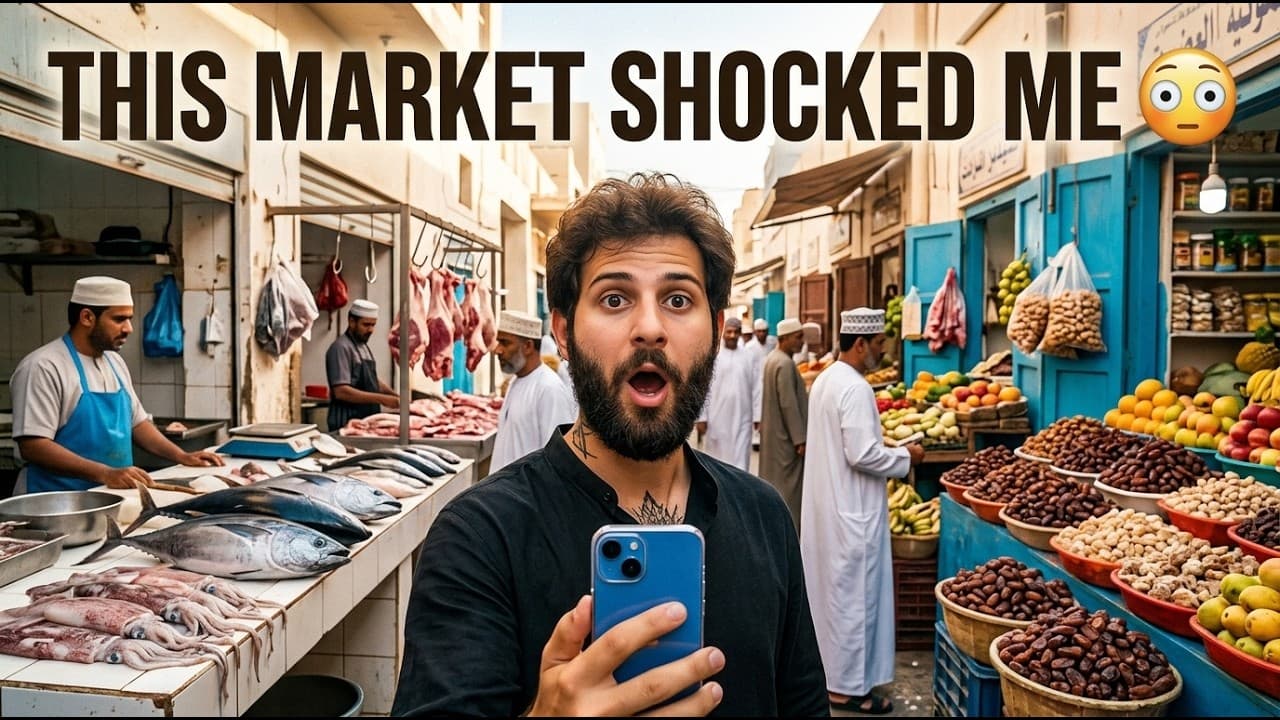
2026年9月16日
Salalah Local Market Guide: Oman's Real Food Scene
If you want a real Salalah local market guide — not the polished souvenir version — you start at the fish stalls, not the frankincense shops. On a slow morning in Dhofar's coastal capital, I walked into the local market with no real plan, just curiosity about what everyday life actually looks like once the tour buses drive past and the city goes back to doing what it does every single day.
The fish section hits you first — not with a smell exactly, more with a rhythm. Ice being shoveled, fish laid out row after row still catching the light, vendors calling out to regulars who clearly know exactly which stall has the best catch that morning. Nobody was performing for a camera. There was no arranged photo moment, no scripted greeting — just the ordinary choreography of a market that has been running the same way for years. This is where Salalah actually eats.
From there the market opens into the meat section, then the fruit stalls, and the pace shifts again — slower, more conversational, people picking through produce and trading a few words with the seller before moving on. It's a small transition but it says a lot: the fish market is fast because the fish won't wait, the fruit stalls are unhurried because that's how buying fruit works everywhere in the world, and somehow Salalah's version of that felt distinct — shaped by Dhofar's own mix of Arab, African, and South Asian trading history that shows up in the produce, the spices, and even the way people haggle.
That mix isn't an accident. Salalah has been a trading port for centuries, long before oil, built originally on the frankincense trade that once made this stretch of Oman's coast one of the most valuable in the ancient world. Frankincense trees still grow in the hills above the city, and the old caravan routes that once carried the resin north are part of why Dhofar's markets feel layered rather than generic — spices, dried goods, and imported staples sit next to fish pulled out of the Arabian Sea that same morning, a small daily reminder of how long this coastline has been a crossroads.
What struck me most, walking through, was how little any of it was staged for outsiders. There's a version of travel where every stop is built for a photo, and then there's a market like this one, where the transaction is the point and you're just quietly allowed to watch it happen. If you're chasing the postcard side of Oman — the wadis, the frankincense museum, the coastline — that's all still there and still worth it. But the local market is where you actually get a sense of how people in Salalah live day to day, not how the city wants to be seen to visitors passing through.
If you're planning your own visit, go in the morning — that's when the fish stalls are freshest and the market is at its most active, before the midday heat thins the crowds out. Dress and behave the way you would in any working-class neighborhood market: casual, respectful, no assumption that vendors are there to entertain you. You don't need a guide or a fixed plan, just time to wander through the fish, meat, and fruit sections at your own pace and let the market's own rhythm tell you where to linger. It's not set up as a tourist attraction, and that's exactly the point — it's one of the few places left in the city that hasn't been arranged for visitors at all, which is precisely what makes it worth the detour.
By the time I left, I'd bought nothing and talked to almost no one directly, and it still felt like one of the most honest stops of the whole Oman trip. That's the thing about a real Salalah local market guide: it's less about what you buy and more about standing still long enough to watch a city feed itself, one ordinary transaction at a time.
最初发布于 YouTube