← 返回博客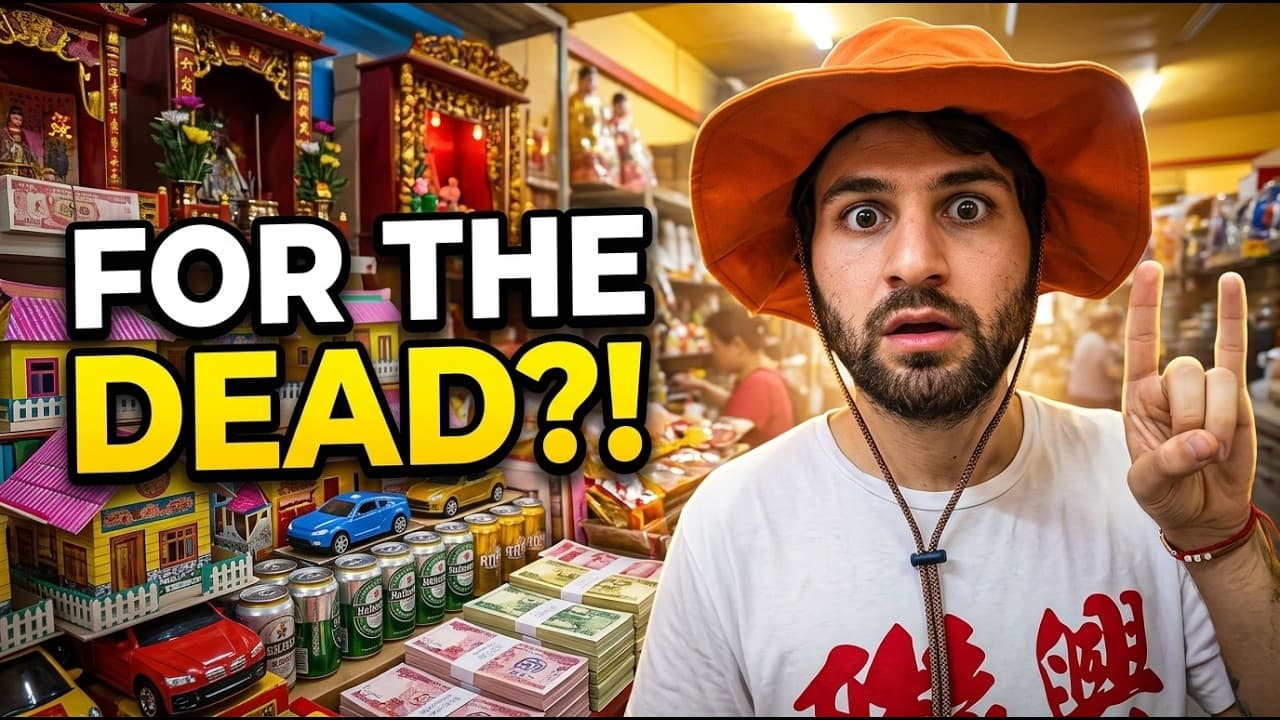
2026年9月4日
Inside Kuching's Shop for the Afterlife: A Visitor's Guide
I found the shop almost by accident, tucked into one of the older shophouse streets of Kuching, the kind of place I'd been walking past all week without really looking. What stopped me was the window: shelves stacked floor to ceiling with miniature paper houses, paper cars, and stacks of paper money in denominations that don't exist anywhere except in the afterlife. Next to them sat something that made me do a double take, cans of paper beer, printed to look exactly like the real brand, folded flat and ready to be assembled and burned.
This is a paper offerings shop, and if you spend any time in a Chinese community in Malaysia, especially somewhere like Kuching with its deep Hakka and Teochew roots, you'll eventually walk past one without realizing what it is. The idea, which the shopkeeper and locals explained to me as I wandered the aisles, is that families buy these paper replicas of houses, cars, money, and even everyday comforts like beer or cigarettes, then burn them at gravesides, temples, or during specific festival dates. The smoke, in traditional Chinese belief, carries the item across into the afterlife, where a deceased relative can supposedly use it exactly as they would have in life. It's an old practice, tied to broader ancestor veneration customs that show up across the Chinese diaspora, most visibly during festivals like Qing Ming and the Hungry Ghost Festival, when the burning intensifies and whole streets fill with smoke and the smell of incense.
Walking through the shop was one of the strangest, most quietly moving experiences I've had while traveling. There's something genuinely touching about the specificity of it. It's not just generic money and houses, shelves held paper versions of things that felt startlingly personal: little wardrobes, paper shoes, even what looked like paper electronics. Someone, at some point, walked in and chose exactly what they thought their late father or grandmother might want on the other side. That's not morbid so much as it is an act of care that just happens to look completely different from how grief gets expressed back home. I picked up one of the paper beer cans to look closer, half expecting it to feel like a novelty item, and it didn't, the shopkeeper handled all of it with total seriousness, the way you'd expect someone to treat any object with real purpose behind it.
If you want to see something like this yourself, the easiest way to visit this Kuching afterlife shop is to keep an eye out while walking through the city's older commercial streets, particularly the areas with a visible Chinese temple or clan association nearby, these shops tend to cluster close to where the burning itself eventually happens. You don't need an appointment or a guide; they're regular retail shops that welcome browsers, and the shopkeepers I encountered were happy to explain what different items were for, even to an obvious outsider with a camera. The best time to visit if you want to see the practice in its fullest form is around Qing Ming in early April or during the Hungry Ghost Festival in the seventh lunar month, when demand spikes and the shops restock with festival-specific items. Outside those windows, the shops still operate quietly year-round, since funerals and memorial dates don't wait for a festival calendar.
What struck me most, thinking back on it after I left, is how normal it all felt to everyone except me. Nobody in the shop treated the paper mansions or the fake banknotes as strange. It was just Tuesday. That gap between how instantly bizarre it looked to me and how unremarkable it was to the people around me is, honestly, most of why I travel in the first place, those moments where you realize an entire belief system, with its own logic and its own comforts, has been operating quietly around you the whole time, if you'd only known where to look. Kuching gave me that in a shop I almost didn't stop for.
最初发布于 YouTube