← Back to blog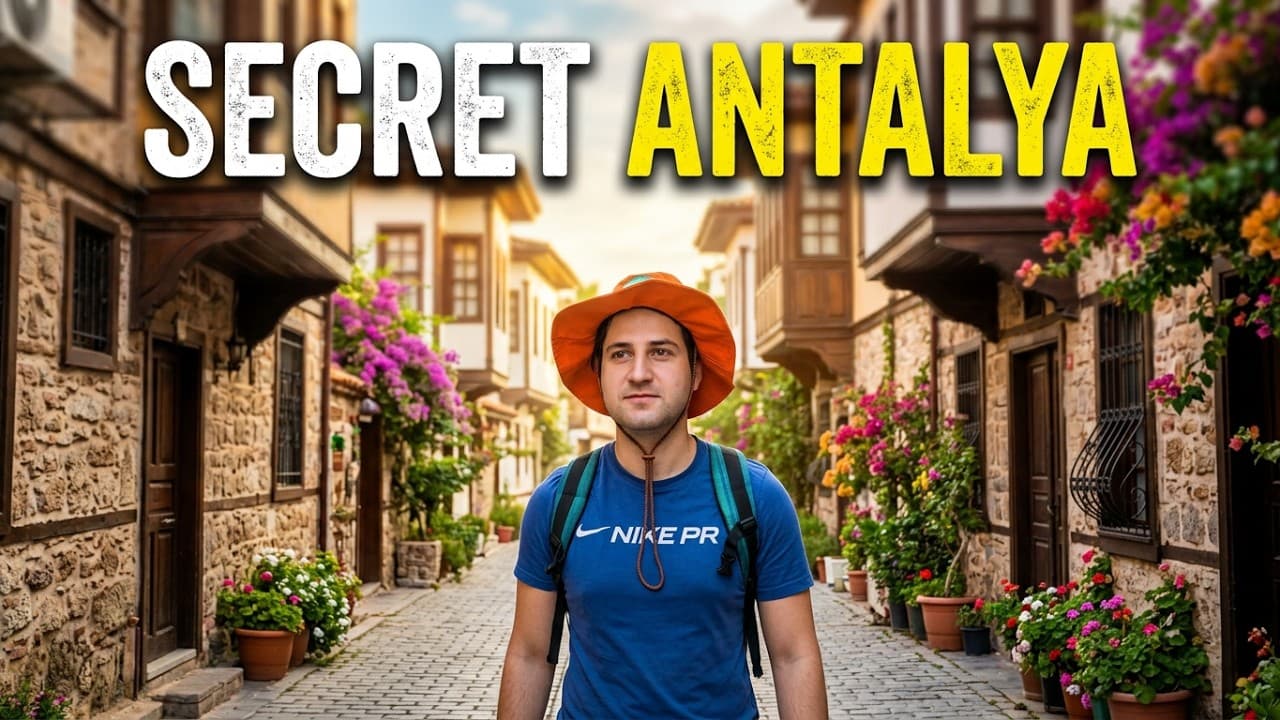
October 20, 2026
Kaleiçi Antalya Old Town: A Walking Guide Beyond the Crowds
I spent a slow afternoon putting together this Kaleiçi Antalya old town walking guide the only way that felt honest: by not following one. Instead of ticking off a list of sights, I let the narrow, sun-worn streets of Antalya's historic Kaleiçi district pull me along at their own pace, turning down alleys with no plan beyond seeing where they led.
Kaleiçi is Antalya's original old town, and it carries that history in layers you can still see if you slow down enough to look. The quarter sits inside ancient Roman-era walls, and over the centuries it was built up further through the Byzantine, Seljuk, and Ottoman periods, each leaving something behind in the stonework, the street layout, and the odd detail on a doorway or window frame. Most visitors see this history from a distance, through the postcard version of the neighborhood: a quick look at Hadrian's Gate, a walk along the marina, a photo, and back to the hotel. Hadrian's Gate itself is one of the clearer reminders of just how old this place is, a Roman gateway that has stood at the edge of the old town since antiquity, long before Antalya's modern waterfront took shape around it. I wanted to see what was behind that postcard version, not instead of it, but underneath it.
That meant walking past the obvious landmarks and into the quieter corners of Kaleiçi, where the old town stops being a backdrop and starts being somebody's actual neighborhood. The stone alleys here are still lived in. Families occupy the houses behind those weathered walls, small workshops keep working away out of sight of the main tourist paths, and tea gardens tuck themselves into corners where a handful of chairs and a view of old stonework is apparently enough. Cats were everywhere, draped across doorsteps and sunning themselves in patches of light between the buildings, about as unbothered by my camera as the people were. Nobody in these streets was performing for a visitor. They were just living, which is exactly the kind of footage I was hoping to come home with.
Along the way I stopped to talk with a few of the people I passed, the way you do when a street is narrow enough and slow enough that bumping into someone feels natural rather than forced. Those conversations, brief as they were, did more to show me what daily life inside these walls actually looks like than any amount of walking alone could have. That's really the whole premise behind this kind of Kaleiçi Antalya old town walking guide: it isn't built around a checklist of top-10 spots, it's built around spending real time somewhere, listening to the people who already live there, and noticing the small, unscripted moments that get skipped over when you're moving too fast to catch them.
If you're thinking about doing a version of this walk yourself, the best advice I can give is the least specific-sounding one: go slowly, and go without an agenda. Kaleiçi rewards wandering in a way that a fixed itinerary works against. Start near the marina and Hadrian's Gate if you want a sense of orientation, since those are the landmarks that anchor the old town and make it easy to find your way back if you get turned around in the alleys, but don't stop there. Let yourself drift into the smaller lanes where the workshops and tea gardens are, the ones without a queue or a sign aimed at tourists. Sit down in one of those tea gardens for a while instead of just photographing it from the doorway. A stone alley in Kaleiçi looks more or less the same in every tourist photo; it only starts to feel different once you've actually sat in it, slowed down, and let a few minutes pass without needing to be anywhere else.
What I came away with wasn't a single standout sight, it was the accumulated feeling of a neighborhood that has survived Roman walls, Byzantine rule, Seljuk and Ottoman control, and centuries of tourism since, while still managing to stay a place where people actually live rather than a preserved museum piece. That's the real case for treating Kaleiçi as a walking guide destination rather than a quick photo stop on the way to the beach: the old town gives you back exactly as much as the time you're willing to spend getting quietly lost inside it.
Originally posted on YouTube